01 — The disconnect
The gap isn't where
you think it is.
of executives say marketing and sales are aligned.
of the people doing the work disagree.
— Forrester
Most companies believe their marketing and sales already pull together. The people actually doing the work know they don't. Leads come in described one way and get worked another; the website promises a story the sales conversation never finishes. This isn't a staffing problem you can hire your way out of — it's structural. Marketing and sales run as two separate systems aimed at the same buyer, each optimized for its own goals, and the seam between them is exactly where opportunities slip away. It's true whether those functions are in-house, outsourced, or split between the two.
02 — The real problem
Generic messaging
loses.
Marketing's most common failure is being too generic and too product-focused — leading with equipment and price instead of the specific problems a specific buyer is trying to solve. That's exactly the failure that makes leads low-quality: it attracts price-shoppers, not buyers. And it's the same failure that sinks an untrained sales rep. The fix is the same on both sides: buyer-focused, vertically-specific messaging that speaks to how a particular kind of customer actually decides. SMR builds it into your marketing. SST trains it into your reps.
03 — The evidence
The research is
one-sided.
Independent research from across B2B keeps converging on one conclusion — integrated, buyer-aligned commercial systems outperform fragmented ones.
of B2B buyers report inconsistencies between a supplier's website and its sales reps.
Gartner · 2025
more likely to hit higher conversion rates when companies share buyer-journey insights across teams.
Gartner
more likely to exceed profit-growth expectations when organizations combine rep-led and self-service interactions.
Gartner
more likely to exceed targets among reps who actively use sales-enablement content.
HubSpot
04 — How it works
Two ways in.
One target.
An integrated program doesn't just hand leads from marketing to sales — it generates qualified demand from both directions at once. Marketing covers a broad but focused field: vertically-specialized content and outreach that draws the right buyers in across a whole market segment. Your reps work the same segment from the other angle: precise, direct outreach to specific high-value accounts. Same vertical, same message, two complementary methods of reaching it. One fires across a focused area; the other takes the precise shots. Both are after the same goal — and because they're aligned, the whole effort lifts.
Sellers who effectively partner with AI tools are 3.7× more likely to hit quota. — GARTNER
SST teaches your reps to use AI tools to research accounts, sharpen their outreach, and self-generate high-quality leads — the exact capability that drives that number.
05 — The lift
Aligned beats
separate. Every time.
Here's what separate vendors can't give you: when the vertical specialization your reps are trained in is the same specialization your website and marketing lead with, the two compound. Marketing's leads stop looking like generic price-shoppers and start looking like the high-quality opportunities your reps would have sourced themselves — because they're built on the same buyer-focused message. Reps get better company leads. Marketing gets a sales team that can actually convert them. Neither side is carrying the other; both are pulling the same direction. That alignment is the lift — and it's only possible when marketing and sales come from partners built to work together.
06 — The security difference
Security sells on education now,
not door counts.
This shift toward consultative, vertically-specialized selling is happening inside the security industry specifically. The integrators winning today don't quote commodity hardware — they translate technology into business outcomes their buyers actually care about, and industry research keeps flagging real gaps in business development and customer education. A general B2B truth becomes a security-specific opportunity: an integrated, vertical-market program closes that gap on both sides at once — marketing that educates the market, and reps trained to carry the same consultative conversation through to the close.
07 — Why us
Sister companies,
one mission.
SMR doesn't partner with a sales-training firm from across the table — we're built alongside one. Security Sales Training is our sister company, focused exclusively on the same industry, teaching the same vertical, buyer-focused approach we build into your marketing. That shared foundation is what makes real integration possible instead of two vendors trying to coordinate after the fact. You get marketing and sales training that were designed to fit — from people who already work as one team.
Learn more about Security Sales Training →08 — See it for yourself
The other half of the system,
built to the same standard.
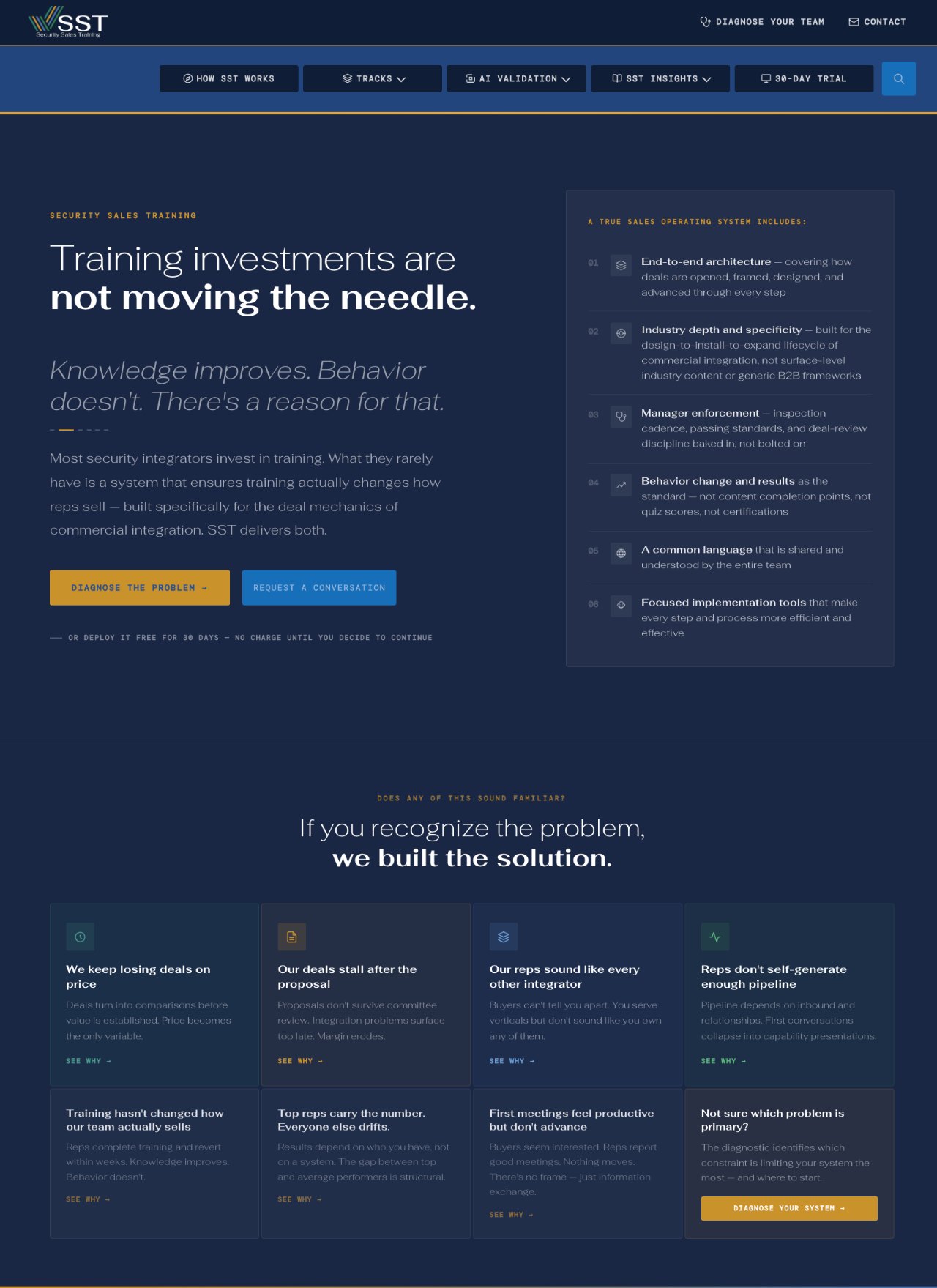
Most security integrators invest in training. What they rarely have is a system that ensures it actually changes how reps sell — built specifically for the deal mechanics of commercial integration. Security Sales Training is that system — and it's engineered to fit the marketing SMR builds, so both pull in one direction.
Let's talk
Let's connect your
marketing and sales
for good.
The buyer-first website engine is how we connect them — one system that carries the buyer from first search to booked meeting, built and guaranteed as a whole.
See the Engine →